
The Effectiveness of The EDGE Experience
One of the defining features of EDGE Professional Series programs is the flexibility of our framework to meet diverse organizational learning needs. The EDGE engages teams through immersive experiential activities designed as micro-experiences — structured challenges that surface existing workplace dynamics in a lower-risk context. Facilitators guide conversations that begin within the shared experience rather than personal critique, allowing teams to examine communication patterns, leadership approaches, and value alignment with greater openness. Each activity follows an intentional cycle of experience, discussion, evaluation, and application, enabling participants to test insights immediately and observe the impact of different choices in real time.
The EDGE designs learning environments that initiate meaningful shifts in systems, processes, and polarities that shape how work gets done. Teams often begin an EDGE workshop focused primarily on tasks and deliverables and leave with a shared framework for examining how they engage with one another and their work. Professional Series outcomes are intended as catalysts — building awareness, shared understanding, and practices that teams can continue refining beyond the program.
A defining element of Professional Series programs is the use of micro-experiences — intentionally designed, low-risk challenges that mirror workplace dynamics in a way that reduces threat while increasing meaningful discourse. These experiences allow teams to practice new approaches to communication, collaboration, and leadership in real time, helping participants recognize the impact of their reactions and experiment with alternative strategies. Because learning occurs in a lower-stakes environment, individuals can test new behaviors, build early successes, and translate those insights into everyday organizational contexts.
Change Workplace Culture
EDGE programs support shifts in workplace culture. Participants engage in shared challenges that increase awareness of current behaviors, communication patterns, assumptions, and leadership behaviors. Facilitated reflection helps teams examine how those patterns influence outcomes and evaluate how behaviors align with workplace values. The next activity in the program provides an opportunity to experiment with alternative approaches. Rather than redefining culture in a single event, EDGE progams initiates momentum that results in continued action toward change beyond the EDGE.
Engagement & Connection
EDGE programs foster engagement and connection by creating learning experiences where participants actively shape the process. Engagement grows when individuals contribute ideas, make decisions together, recognize successes, and test new approaches within structured activities. Engagement emerges through repeated cycles of participation, feedback, and visible progress. When employees feel heard and valued within the learning experience, their sense of ownership & commitment to the organization increases.
Theory into Practice
The EDGE process creates a bridge between conceptual learning and practice. The EDGE is a popular tool integrated into area Leadership Development cohorts. Growth is enhanced when frameworks introduced in the classroom are translated into action through micro-experiences that mirror workplace dynamics. Individuals get to test out skills, collect relevant feedback, ask questions, gain clarity and confidence that they can directly apply back in the workplace.
Well-Being
The EDGE program offers a practice in well-being. Research shows spending time in natural outdoor environments improves mental and physical health. EDGE programs that occur on our outdoor Challenge Course introduce nature pauses from technology. Movement is encouraged and practiced between activities that are spread across 1.2 miles of wooded and wetland trails. A Professional Series program on our EDGE course provides opportunities to practice presence, perspective-taking, and intentional communication – behaviors that contribute to sustainable well being.
Targeted Outcomes
Each Professional Series Program is intentionally shaped through a collaborative design process. As part of booking an EDGE program, organizations identify their targeted outcomes and partner with EDGE staff to clarify priorities, organizational context, and what meaningful progress looks like within the available program time. This planning phase narrows the possibilities to a customized sequence ensuring the program aligns with real workplace dynamics while setting realistic, actionable expectations for what can be initiated during the experience.
How We Do It
We create team-based learning experiences through experiential education grounded in Kolb’s Experiential Learning Cycle. EDGE programs guide teams through repeated cycles of Concrete Experience, Reflective Observation, Abstract Conceptualization, and Active Experimentation, allowing participants to explore organizational dynamics and apply insights in real time.
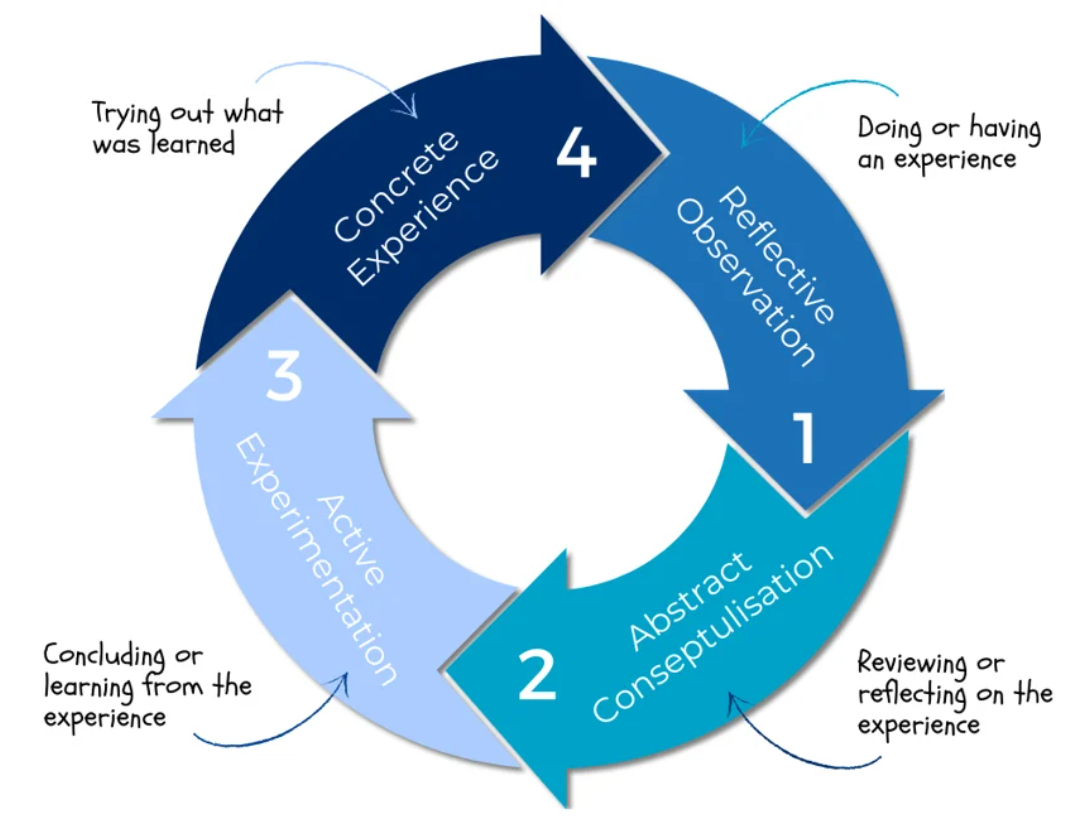
Concrete Experience (Activity) — Teams engage in facilitated micro-experiences that simulate workplace challenges, creating a shared reference point for learning.
Reflective Observation (Reflection) — Guided dialogue helps participants examine communication patterns, leadership behaviors, and how decisions influenced outcomes.
Abstract Conceptualization (Analysis) — Facilitators introduce models and frameworks that help teams interpret their experience and connect it to real organizational contexts.
Active Experimentation (Ideas) — Participants test new approaches in subsequent activities, refining communication, planning, and collaboration strategies they can carry back to the workplace.
Through these iterative learning cycles, awareness expands, shared language develops, and teams practice new ways of engaging — initiating progress that continues beyond the EDGE experience.
Many times, organizations come to The EDGE with unique circumstances. With this information, the facilitators lead the team through specific activities that will encourage the team to confront the challenges they face. The result is new awareness for the challenges and skills that will carry back to the workplace.
Why It Works
In the last 30 years, a great deal of research has been done on adult learning. The research results all indicate that adults learn best when they actively experience a concept or idea. As compared to other methods of training, these active learning experiences create the highest percentage of not only remembering the concept but actually using it (also referred to as “transfer”). Research also indicates that when training is fun, recall will be much greater. The organic experience of learning as a team in a fun, casual atmosphere creates a common language to discuss other challenges that may emerge as the team matures and changes.
Sources
As advocates of experiential education, we invite you to learn more about adult learning and “experiential education”.
Association for Experiential Education
www.aee.org
Association for Challenge Course Technology
www.acctinfo.org
National Society for Experiential Education
www.nsee.org
Experience-based Training and Development Research Studies
www.tarrak.com/FREE/res.htm
Experienced Based Learning Systems Research Library
http://www.learningfromexperience.com/research-library/